![]()
Topple
Fibreglass, PVA adhesive, sea salt
2012
Topple
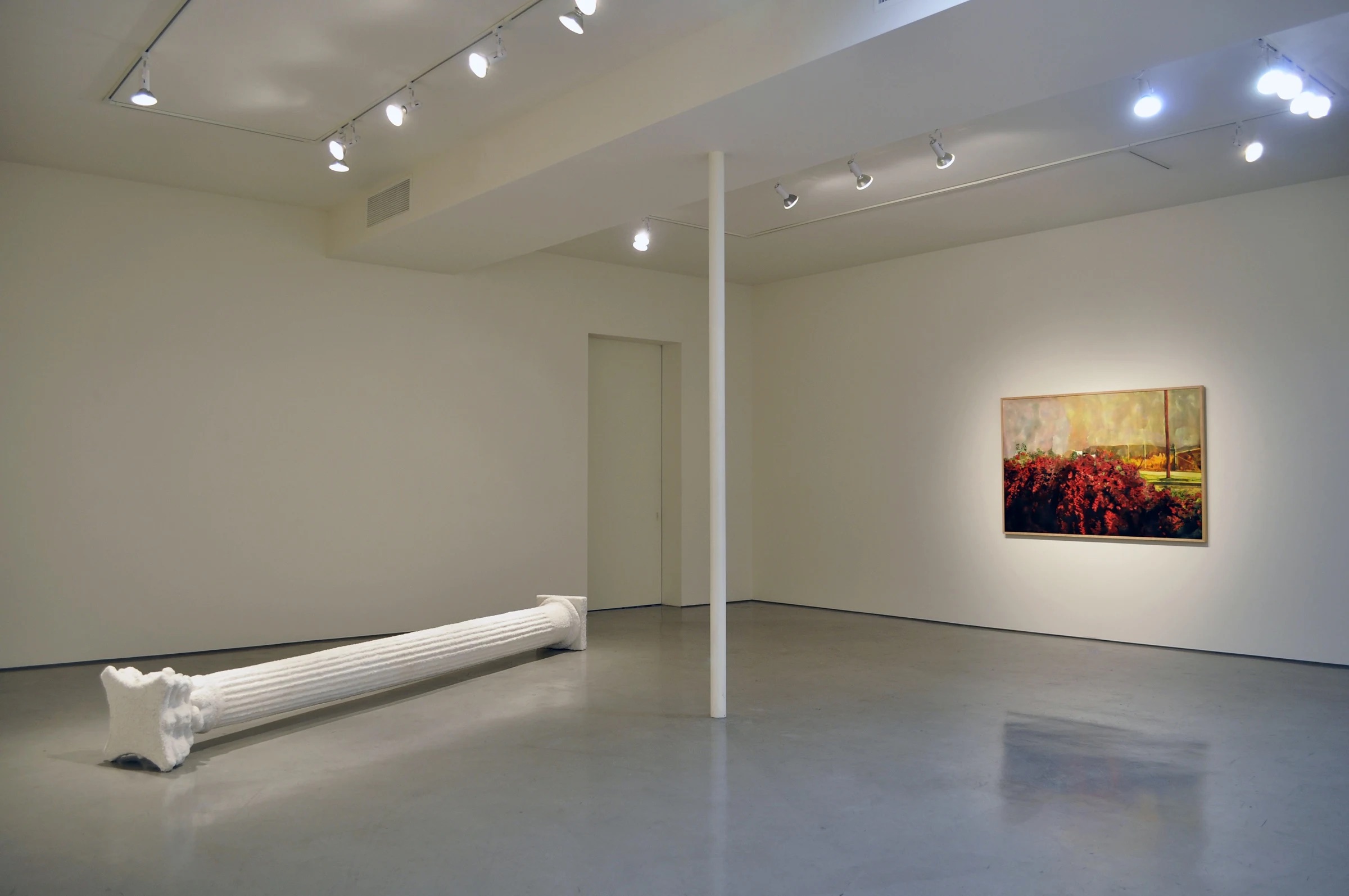
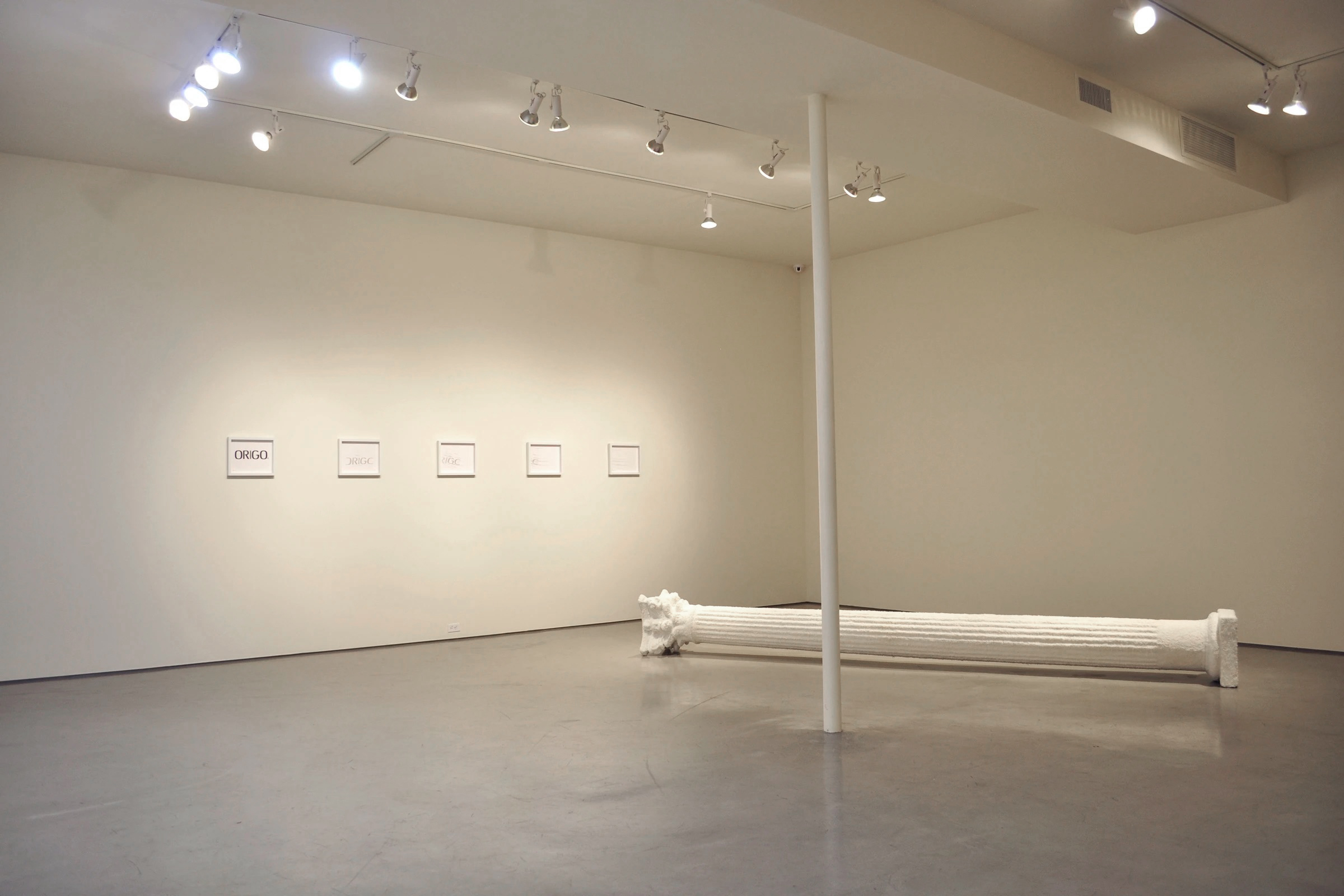
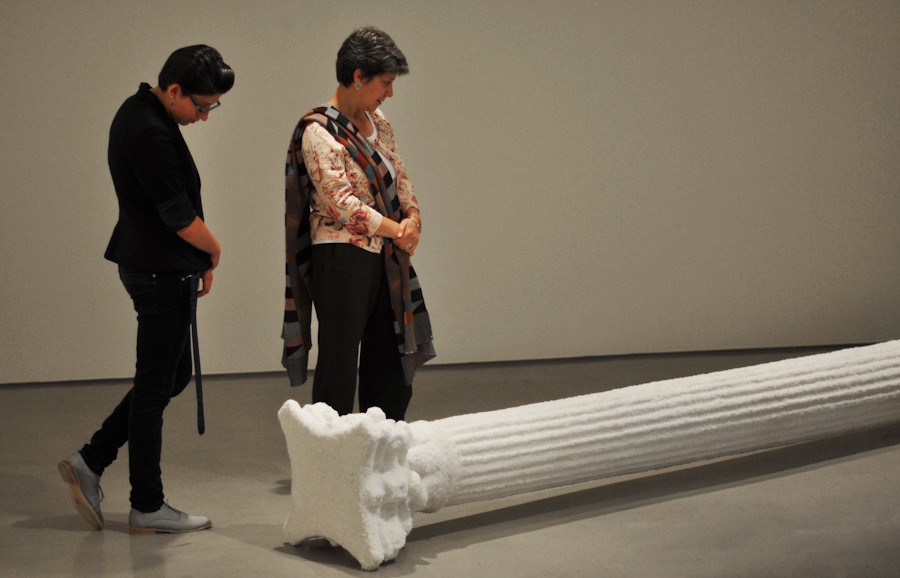
Topple presents a thirteen-foot Corinthian column collapsed and crystallized beneath a dense surface of salt, transforming a symbol of Western permanence into an artefact suspended between monument, ruin, and material event. The work interrogates how architectural forms meant to project stability and authority become vulnerable to the very forces they seek to transcend. Here, the column is not simply fallen; it has entered a state of active renegotiation, where its ideological clarity dissolves under processes of entropy and material drift.
Salt functions as an osmotic, agentive material — simultaneously preservative and corrosive — encrusting the surface with crystalline structures that obscure and destabilize the column’s intended meaning. This slow accumulation echoes the contradictions of contemporary civic and suburban utopias, where polished veneers conceal underlying fragilities. The crystalline skin becomes less a covering than an emergent ecology, asserting its own logic over the inherited architectural form.
The ruin in Topple is not romanticized, nor is it framed as a terminal condition. Instead, it marks a threshold where cultural symbols detach from their historical frameworks and enter states of transformation shaped by environmental, material, and ideological forces. The column becomes a hybrid artefact — part architectural remnant, part active surface — revealing how entropy, cultural memory, and matter co-produce new forms of meaning. The work proposes collapse not as an ending, but as a generative moment in which dominant narratives falter and new relational possibilities arise.